
It’s 2:00 AM. You’ve been staring at the ceiling for over an hour. Your brain is racing—tomorrow’s meeting, unread messages, or an awkward phrase from earlier in the week. You flip your pillow, adjust your position, and glance at your phone: 2:17 AM.
If you’ve experienced this, you’re not alone. I know this cycle intimately. Learning how to fall asleep faster isn’t about forcing rest; it’s about resetting your physical alignment and cognitive state. Over the years, I’ve tested over 1,000 pillows while researching actionable sleep habits to help people figure out how to fall asleep faster naturally.
How I Test Pillows & Track Sleep Physicality
Testing over 1,000 pillows taught me that evaluating sleep isn’t about the first 5 minutes in bed. I look at five specific criteria during my personal testing:
- 1. Initial Comfort vs. Overnight Support: Does the plush feel last, or does the fill collapse by 3:00 AM?
- 2. Micro-Adjustments: How many times do I subconsciously shift my head or shoulders during the night?
- 3. Cervical Neutrality: Does my neck remain parallel to the mattress without pushing my chin forward?
- 4. Heat Accumulation: Does the core materials trap body heat, triggering restlessness?
- 5. Morning Neck Condition: Is there localized muscle tightness upon waking up?
Why You Need More Than Willpower to How to Fall Asleep Faster
In sleep medicine, falling asleep is understood as a transition from high autonomic arousal to parasympathetic dominance. This transition is easily interrupted by key psychological and physiological roadblocks:
- Cognitive Hyperarousal: Active problem-solving, stress, or anticipatory anxiety activates the sympathetic nervous system, raising heart rate and muscle tone.
- Conditioned Arousal (The Bed = Stress): When you repeatedly lie awake feeling frustrated, your brain forms a classical conditioning loop: the bed becomes a cue for alertness rather than relaxation.
- Physical Micro-Tension: Subtle shoulder shrugging, jaw clenching, or neck strain keeps sensory pathways active, signaling to the brain that the environment requires vigilance.
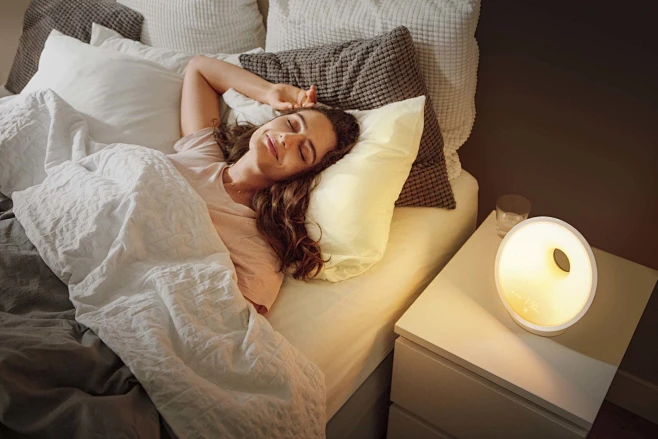
“When individuals struggle with sleep, staying in bed while frustrated reinforces conditioned arousal. Clinical guidelines emphasize that the bed should be reserved strictly for sleep and intimacy to re-establish the mental association between bed and rapid sleep onset.”
Part 1: How to Fall Asleep Faster Tonight (Immediate Hacks)
1. Practice 4-7-8 Breathing to How to Fall Asleep Faster
Inhale through your nose for 4 seconds, hold your breath for 7 seconds, and exhale slowly through your mouth for 8 seconds. This structured rhythm diverts focus from racing thoughts and stimulates vagal tone to lower heart rate.
2. Perform Progressive Muscle Relaxation (PMR)
Systematically tense each muscle group for 5 seconds and release completely, moving from your toes up to your face. PMR helps build acute awareness of physical tension, allowing you to manually release micro-tightness in your shoulders and jaw.
3. Give Your Mind a Low-Stimulus Visualization Task
Instead of demanding a “blank mind,” occupy your brain with a neutral, non-emotional scenario (e.g., visualizing a quiet room or repetitive natural pattern). This prevents active problem-solving pathways from taking over.
4. Perform a 5-Minute “Brain Dump” Write-Down
If pending tasks or worries are cycling through your mind, get out of bed briefly and write them down on a physical pad. Moving thoughts out of working memory signals to your brain that they are safely stored for tomorrow.
5. Apply the 20-Minute Out-of-Bed Rule to How to Fall Asleep Faster
If you remain fully awake after roughly 20 minutes, leave the bedroom. Sit in a dimly lit space and engage in a calm activity (such as reading a physical book) until true drowsiness returns. Protect the bed-sleep association.
6. Facilitate Core Body Temperature Drop
Your body must shed core heat to initiate sleep. Taking a warm bath or shower 60–90 minutes before bed causes peripheral vasodilation, helping your core temperature drop rapidly once you lay down.
7. Evaluate Physical Comfort & Neck Alignment
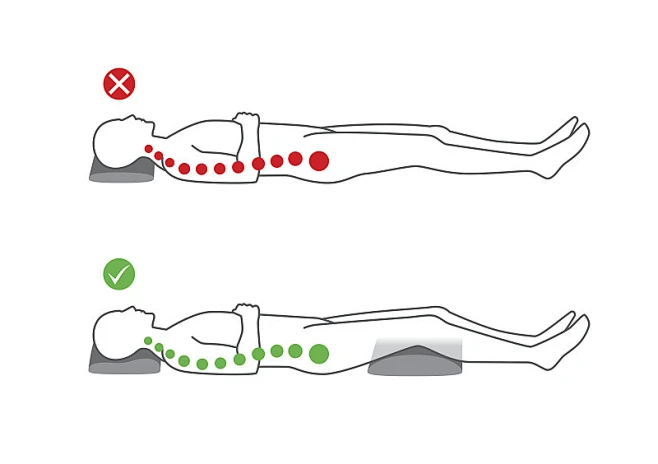
If you find yourself constantly flipping your pillow or repositioning your shoulders, your body is attempting to correct unnatural spinal curvature—a frequent hidden cause of delayed sleep onset.
Part 2: Long-Term Habits on How to Fall Asleep Faster
8. Anchor a Consistent Wake-Up Time
Maintain a stable wake-up time every day (including weekends). A fixed wake time stabilizes your central circadian clock and ensures consistent sleep pressure build-up by nightfall.
9. Seek Morning Outdoor Light Exposure
Get 10–15 minutes of natural sunlight within an hour of waking. Morning light suppresses melatonin, boosts daytime alertness, and sets your internal circadian rhythm for evening melatonin release.
10. Implement an Afternoon Caffeine Cutoff
Caffeine has an average half-life of 5–6 hours. Consuming caffeine past 2:00 PM leaves active adenosine-receptor blockers in your brain, impairing deep slow-wave sleep even if you manage to drift off.
11. Limit High-Engagement Content Before Bed
The psychological arousal caused by news, work chats, or social media debates is often far more damaging to sleep onset than blue light alone. Switch to passive, low-stimulus activities 1 hour before sleep.
12. Establish a Predictable Wind-Down Routine
Create a 30-minute pre-sleep ritual (e.g., warm washup, gentle stretching, light reading). Repeating these steps in the same order conditions your nervous system to anticipate rest.
13. Optimize Room Environment (Cool, Dark, Quiet)
Keep your bedroom cool (ideally 60–67°F / 15–19°C), pitch-black (via blackout curtains or a mask), and use steady white noise to drown out disruptive ambient sounds.
14. Exercise Regularly (Finish Early)
Consistent physical activity reduces anxiety and strengthens circadian rhythms. Finish strenuous workouts at least 3 hours before bed to give core temperature time to cool down.
15. Select the Right Pillow Support (Lessons From 1,000+ Tests)
While a pillow is not a clinical treatment for chronic insomnia, choosing the right support is one of the most overlooked physical tools to help you how to fall asleep faster and stay asleep through the night. Many soft pillows feel luxurious for the first 10 minutes but flatten completely by midnight—causing your neck to bend and forcing your body to micro-adjust all night long.
What I Look For in Proper Pillow Architecture:
- Side Sleepers: Need structural loft retention to bridge the distance between the ear and shoulder tip without collapsing.
- Back Sleepers: Require cradling support that maintains the natural cervical curve without pushing the head forward.
- Stomach Sleepers: Require an ultra-low profile to minimize rotational strain on the neck.
Why We Use Layered White Goose Down & Feather Scaffolding:
To solve the “collapsing soft pillow” problem, we pair plush, high fill-power 900 FP white goose down with an inner supportive feather core. This delivers a soft, cloud-like surface touch alongside resilient structural scaffolding that holds your neck neutral until morning.
Experience Cloud-Like Support: BEST 900 FP Goose Down Pillow
Engineered with ultra-pure 900 Fill Power white goose down and a supportive structural inner core, delivering weightless cervical alignment that won’t flatten overnight.
Shop BEST Goose Down Pillow →Understanding Medical Boundaries: Sleep Hygiene vs. CBT-I
Sleep hygiene tips and ergonomic pillows are excellent for general wellness and physical relaxation. However, the American Academy of Sleep Medicine (AASM) notes that standalone sleep hygiene is usually insufficient for chronic insomnia. If sleep difficulties persist longer than 3 months, consider seeking Cognitive Behavioral Therapy for Insomnia (CBT-I)—the gold standard medical intervention.
Further Reading & Scientific Resources
To explore the clinical research, deep sleep optimization, and expert guidelines behind behavioral sleep health, consult these medical and specialized sources:
- How to Get More Deep Sleep: Science-Backed Strategies for Restorative Rest — Our in-depth guide on extending stage 3 non-REM sleep.
- American Academy of Sleep Medicine (AASM) — Clinical practice guidelines on behavioral and psychological treatments for chronic insomnia.
- Sleep Foundation — Evidence-backed guidelines on light exposure, sleep environment, and sleep hygiene.
《How to Fall Asleep Faster: 15 Practical Ways That Actually Work》有3条评论
评论已关闭。