Why Do I Keep Waking Up With Headaches? Could Your Pillow Be the Cause?

Have you ever slept for 7–8 hours, only to find yourself waking up with headaches, a dull pressure around your temples, or pain behind your eyes and back of the head?
Many people immediately blame stress, an irregular sleep schedule, dehydration, or migraine triggers. But there is another factor that is easy to overlook and stays with you every night: your pillow.

Over the years, I have tested hundreds of pillows and noticed a very common pattern: many people get enough sleep but are constantly waking up with headaches, neck stiffness, or shoulder discomfort. In some cases, pillow height, sleeping position, and insufficient neck support are worth checking.
When your neck stays in an uncomfortable position for hours, the surrounding muscles may remain under prolonged strain instead of fully relaxing during sleep.
In this guide, I’ll explain why you might be waking up with headaches, show you a simple way to check whether your pillow could be part of the problem, and share practical ways to create a more comfortable sleeping setup.
1. What Is a Cervicogenic Headache?
A cervicogenic headache is a type of secondary headache in which the pain originates from structures or soft tissues in the neck. Pain starting in the neck can cause people to end up waking up with headaches that radiate toward the front of the head or behind the eye. Some people also experience neck pain or reduced neck movement.
However, not every morning headache is a cervicogenic headache. Migraine, tension-type headaches, sleep apnea, dehydration, teeth grinding, and other factors can also cause waking up with headaches. Symptoms alone cannot confirm the exact type of headache.
Some people experience pain that starts at the back of the head and moves toward the front or behind the eye, sometimes together with neck discomfort or limited neck movement.
Learn more from Cleveland Clinic’s guide to cervicogenic headaches.
Some headaches related to the neck may change as your neck position or movement changes. However, this pattern by itself does not establish a diagnosis.
If your neck remains in an uncomfortable position throughout the night, the muscles around the neck may stay tense for a prolonged period. For some people, that accumulated tension results in waking up with headaches almost every morning.
2. Four Pillow-Related Reasons You May Be Waking Up With Headaches
Your pillow plays an important role in how your head and neck are positioned during sleep. Even if a pillow feels comfortable when you first lie down, the wrong height, support level, or sleeping position may contribute to neck strain and waking up with headaches.
1. Your Pillow Loft Doesn’t Match Your Sleeping Position
Pillow height, or loft, is one of the most important things to consider when trying to maintain comfortable spinal alignment during sleep. There is no single perfect pillow height for everyone. Your ideal loft depends on your sleeping position, body shape, shoulder width, mattress, and personal comfort.
Back sleepers: A pillow that is too high may push the chin toward the chest and place the neck in an uncomfortable forward position. A pillow that is too low may allow the head to tilt backward.
Side sleepers: A pillow that is too low may allow the head to drop toward the mattress, while a pillow that is too high may push the head upward. Both situations can make it harder to keep the neck comfortably aligned.
Softness alone is not enough. A pillow can feel incredibly soft and still leave you waking up with headaches if it has the wrong loft for your sleeping position.
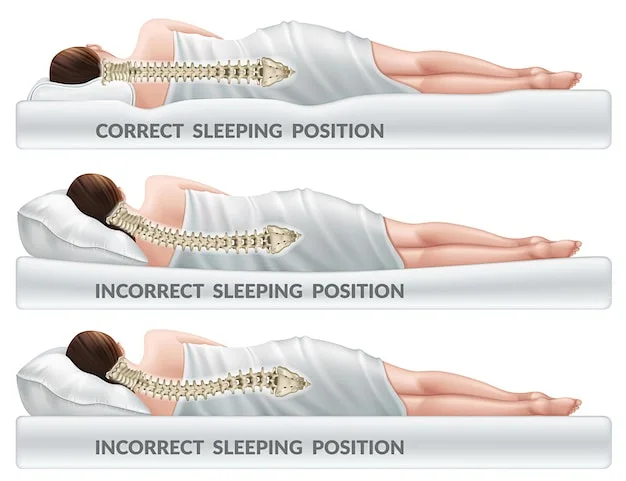
The goal is to keep your head and neck in a comfortable, neutral position based on your sleeping position and body shape.
2. Your Pillow Has Lost Its Loft and Support
Pillows can gradually lose their loft, resilience, and original support as they are used over time. Fill materials may become compressed or develop lumps, causing the pillow to flatten more easily under your head.
Many people continue using a pillow long after it has become flat or uneven without realizing how much its support has changed. If a pillow no longer provides the support it once did, your neck may have to work harder to maintain a comfortable position, leaving you waking up with headaches.
3. The Fill Material Is Too Soft or Too Firm for You
A pillow that collapses completely under your head may provide too little support for your sleeping position. Many people assume that softer automatically means better, but softness should not come at the expense of comfortable support.
On the other hand, a pillow that feels excessively firm may create pressure around the back of the head and the transition between the head and neck.
Some lower-quality synthetic or down-alternative fills may lose their loft more quickly with repeated compression. High-quality white goose down can offer a softer, more moldable feel while still allowing the pillow to adapt around the shape of your head and neck.
A comfortable pillow should allow your head to sink naturally into the surface without simply collapsing flat underneath you.
4. Allergens Inside an Older Pillow May Contribute to Morning Discomfort
Waking up with headaches is not always related to sleeping position alone. Older bedding can also accumulate dust mite allergens, dead skin particles, and other irritants. For people who are sensitive or allergic to dust mites, exposure may contribute to nasal congestion, sinus pressure, and morning headaches.
Washing your pillowcase regularly helps keep the surface clean, but it does not necessarily remove everything that may accumulate deeper inside a pillow over time.
The American Lung Association notes that dust mite allergens can be found in bedding, mattresses, and pillows, and that exposure can cause symptoms such as congestion and facial pressure in people who are allergic or sensitive to dust mites.
Source: American Lung Association — Dust Mites
3. Rule Out Other Common Causes of Waking Up With Headaches
Your pillow is only one possible factor. Waking up with headaches can also be associated with:
- Sleep apnea or interrupted breathing during sleep
- Dehydration
- Teeth grinding at night
- Changes in blood pressure
- Dietary, alcohol, hormonal, or other migraine triggers
If waking up with headaches happens frequently and you also snore loudly, wake up gasping or choking, experience pauses in breathing during sleep, or feel unusually sleepy during the day, talk with a healthcare professional about possible sleep apnea.
These symptoms are listed by Mayo Clinic’s guide to obstructive sleep apnea.
Consider these other factors before assuming that your pillow is the main reason you are waking up with headaches.
4. Could Your Pillow Be Contributing to Waking Up With Headaches?
Use the checklist below to decide whether your pillow and sleeping position are worth investigating.
- You find yourself waking up with headaches accompanied by neck stiffness, and the discomfort seems to improve after getting up and gently moving your neck.
- Your pillow has developed lumps, become noticeably flatter, or has been used for a long time.
- When you lie down, your head or neck visibly tilts upward or downward instead of feeling naturally aligned.
- You sleep on a different pillow while traveling and notice that waking up with headaches or neck discomfort happens less often.
If several of these points sound familiar, your pillow and sleeping position are worth checking first. However, this does not prove that waking up with headaches is solely caused by your pillow.
5. How to Choose a Pillow That May Help Reduce Morning Neck Discomfort
Adjusting your pillow setup may help reduce discomfort related to an awkward sleeping position or insufficient support.
Choose the Right Loft for Your Sleeping Position
Back Sleepers
Many back sleepers prefer a low-to-medium loft that supports the natural curve of the neck without pushing the chin toward the chest.
Side Sleepers
Many side sleepers need more loft to fill the space between the head and shoulder and help keep the neck comfortably aligned.
Stomach Sleepers
Stomach sleeping can place the neck in a rotated position for long periods. If possible, gradually transitioning toward side or back sleeping may be worth trying.
Look for a Balance of Softness and Support
Avoid a pillow that completely collapses as soon as you put your head on it. Instead, look for a fill that allows some gentle sinking while still maintaining enough structure to support your preferred sleeping position.
High-quality white goose down can be a good option for people who prefer a softer, more moldable pillow. It can conform around the head and neck while providing a plush sleeping feel. The goal is not simply to choose the softest pillow, but to find a pillow that feels comfortable while maintaining appropriate support for your body and sleeping position.
A good pillow should feel soft and comfortable, but your head should not simply sink all the way through it.
Why I Prefer a More Moldable Pillow
After testing hundreds of pillows, one thing I have learned is that pillow comfort is highly personal. Some sleepers prefer a firmer, more structured feel, while others sleep better with a softer pillow that can be shaped around the head and neck.
For sleepers who prefer that softer, adjustable feel, a high-quality white goose down pillow can be an option worth considering. The key is matching the loft and support to your sleeping position rather than choosing a pillow simply because it feels soft.
This is also one of the reasons we designed the BEST White Goose Down Pillow with different loft options for different sleeping preferences.
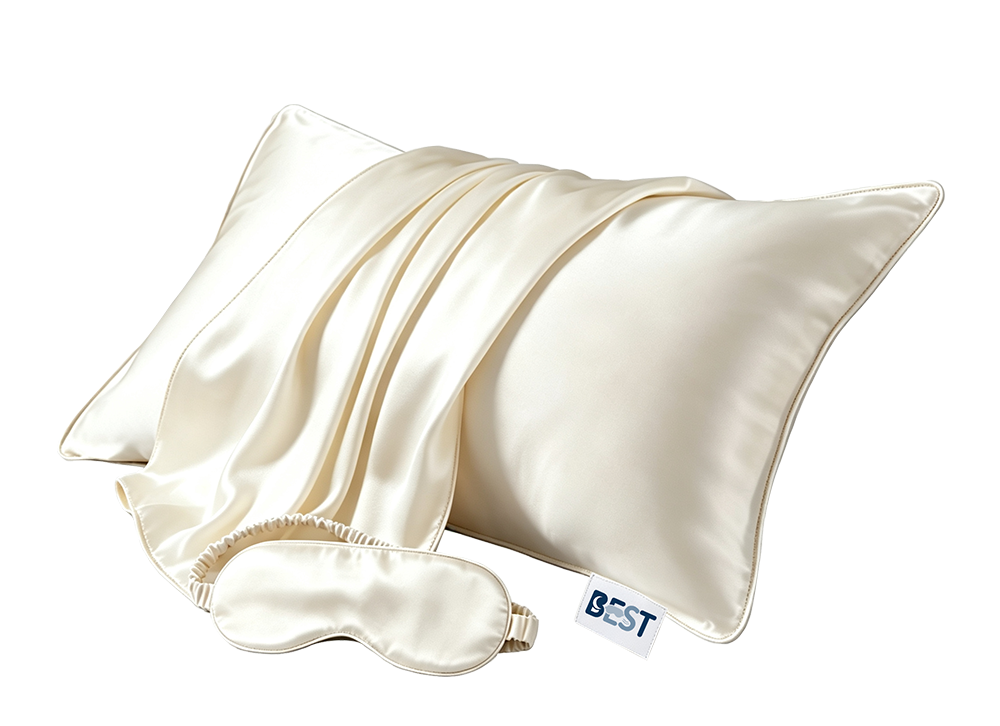
BEST™ 900 FP White Goose Down Pillow
Designed with tailored loft options to support natural neck alignment and help prevent waking up with headaches.
Explore Loft OptionsPillow Care and Replacement
- Wash or change your pillowcase regularly to help keep the sleep surface clean.
- Check your pillow regularly for permanent flattening, lumps, or loss of support.
- Keep your sleeping environment clean and dry, especially if you are sensitive to dust mites.
- Replace your pillow when it no longer provides comfortable support, rather than relying only on a fixed replacement date.
6. When Should You Talk to a Doctor About Waking Up With Headaches?
Most instances of waking up with headaches are not caused by a serious condition, but some symptoms should not be ignored.
Seek urgent medical attention if a headache is sudden and extremely severe, follows a head injury, or occurs with symptoms such as confusion, weakness, numbness, trouble speaking, vision changes, seizures, fever, or a stiff neck.
You should also talk with a healthcare professional if waking up with headaches becomes more frequent, more severe, or noticeably different from your usual pattern.
See Mayo Clinic’s headache first-aid guide for additional information about headache warning signs.
Final Thoughts
Waking up with headaches can affect your entire day. Before assuming that your pillow is the only problem, take a closer look at your sleeping position, pillow height, neck support, sleep habits, and other possible causes.
If waking up with headaches is accompanied by neck stiffness and seems to be related to your sleeping position, adjusting your pillow may help improve your overall sleep comfort and reduce neck-related discomfort.
A good pillow is not simply something that sits underneath your head. It should help create a comfortable sleeping position and give your neck the support it needs throughout the night.
If you have been dealing with recurring morning neck discomfort and want to stop waking up with headaches, exploring a softer, more moldable pillow designed around different sleeping positions is a great step. You can check out the BEST White Goose Down Pillow to see whether its loft options match your sleeping habits.

BEST™ 900 FP White Goose Down Pillow
Customizable loft and ultra-soft 900 fill power goose down designed to support proper head-and-neck alignment.
Shop Best Goose Down Pillow
《Why Do I Keep Waking Up With Headaches? Could Your Pillow Be the Cause?》有1条评论
评论已关闭。