Wake Up with Neck Stiffness? 4 Proven Causes & Bedding Fixes

Have you ever woken up, turned over in bed, and immediately noticed that your neck feels tight, sore, and restricted? You may have slept for 7–8 hours expecting a refreshing night’s rest, only to be greeted by frustrating neck stiffness the moment your head leaves the pillow.
I’ve spent years paying close attention to how people sleep and testing sleep hardware, and I’ve noticed something interesting: sudden morning neck stiffness is not always caused by looking down at your phone or sitting at a desk during the day. Very often, the problem stems directly from what happens while you are asleep.
Over the years, I’ve personally tested hundreds of pillows and tried many different bedding combinations. One crucial lesson I’ve learned is that when people deal with persistent neck stiffness, they usually look for stretches, massages, or quick pain relievers, but completely forget to audit the setup supporting them for 7–8 continuous hours each night.
Your pillow, mattress, sleeping position, and even the fabric surface you rest on directly dictate how your cervical spine aligns overnight.
In this guide, I’ll break down the primary culprits behind why you wake up with neck stiffness and share actionable bedding adjustments to help restore morning comfort.

What Causes Morning Neck Stiffness?
There is rarely a single isolated trigger for waking up with a stiff, achy neck. Your daytime habits, sleeping posture, pillow loft, mattress support, and muscle fatigue all interact simultaneously.
When your head and cervical spine remain held in an awkward, unsupported angle for hours, the surrounding muscles stay continuously contracted. This unnatural tension leads directly to severe morning neck stiffness and localized soreness when you attempt to move.
For additional medical insights into sleeping positions and neck comfort, review Sleep Foundation’s guide to sleeping positions and neck pain.
1. Your Pillow Height Disconnects Cervical Alignment
When evaluating any pillow, the very first factor I test is its compressed height (loft). A pillow that fails to match your unique sleeping posture creates a continuous mechanical angle on your spine.
A pillow that is too high forces your head forward or upward, while an overly flat pillow lets your neck drop toward the mattress. Both extremes strain your cervical tendons and trigger intense neck stiffness after hours of static pressure. If you are unsure about the ideal height for your body type, you can read my detailed guide on how high your pillow should be.
Many sleepers make the mistake of focusing solely on where their head cradles, neglecting whether the neck curve itself receives firm support. Furthermore, old pillows lose their resilience over time, resulting in uneven support that aggravates neck stiffness in the morning.
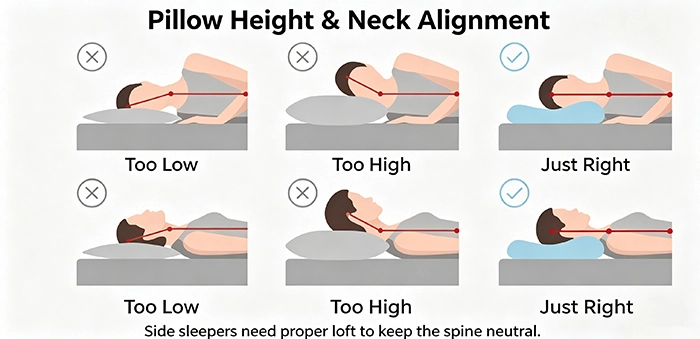
The Goal Is Neutral Ergonomic Support
An effective pillow is neither the highest nor the softest option available. The goal is achieving neutral cervical alignment, keeping your spine seamlessly supported in your natural sleeping position.
2. Your Sleeping Position Places Pressure on Your Neck
Different sleeping positions require drastically different pillow support structures to avoid nighttime tension and morning discomfort.
- Stomach sleeping: Forces your head to twist to one side for hours to breathe, placing massive rotation stress on cervical joints and making it a primary cause of neck stiffness.
- Side sleeping: Requires sufficient loft to bridge the gap between your ear and shoulder. If the pillow collapses, your neck bends downward toward the mattress.
- Back sleeping: Requires a supportive contour under the neck without pushing the back of your head excessively forward.
Explore detailed position advice at Sleep Foundation: Best Sleeping Position for Neck Pain.
3. Your Mattress Has Lost Structural Integrity
Even the highest-grade pillow cannot correct a sagging or overly soft mattress.
When a mattress lacks mid-section support, your hips and shoulders sink too deep. This downward dip distorts your entire spinal line, pulling on your upper back and causing unexpected cervical neck stiffness upon waking.
Learn how mattresses and pillows collaborate in sleep posture at Sleep Foundation’s pillow research guide.
4. Daytime Posture Tension Follows You into Bed
Not all nighttime discomfort originates in the bedroom. Hours spent looking down at laptops, driving, or staring at smartphones create pre-existing muscle fatigue.
When you sleep on an improper pillow with pre-strained muscles, those tight fibers freeze overnight, resulting in acute waking neck stiffness.
Harvard Health outlines daytime posture habits and simple stretches at Harvard Health: Practical Tips to Prevent Neck Pain.
Bedding Fixes to Prevent Neck Stiffness
Optimizing your sleep hardware is one of the fastest, most practical ways to reduce physical stress on your neck while resting.
Match Pillow Loft Directly to Your Sleep Style
Selecting the right pillow height involves balancing your sleeping posture, shoulder breadth, and pillow fill material. To break down specific measurements for side, back, and stomach sleepers, check out our guide on finding the right pillow height for your setup.
Focus on cradling the head while providing subtle fill under the cervical curve. The goal is to prevent your head from tilting forward toward your chest.
Side sleepers need adequate height to fill the neck-to-shoulder clearance. High fill-power options (like 900 FP goose down) or responsive inserts help maintain consistent loft all night.
Because stomach sleeping guarantees cervical twisting, try transitioning to side sleeping with a body pillow. If you must sleep on your front, use an ultra-thin pillow to minimize neck hyper-extension.
The Quick Alignment Test
Lie down in your standard position and have someone check your spine: Does your nose align with your sternum, or is your head noticeably tilted up or down? Aim for a completely relaxed, neutral profile.
Choose High-Performance Pillow Fills
Different materials react entirely differently under weight and heat, impacting how well they prevent overnight neck stiffness:
- High-Quality White Goose Down: Offers lightweight, adaptive support. High fill power down compresses under pressure to mold perfectly around your head and neck while remaining extraordinarily breathable.
- Memory Foam: Provides dense contouring, though some sleepers find it retains heat or feels overly rigid.
- Synthetic Fills: Lower-tier poly-fills often clump or flatten rapidly, losing their supporting height within months.

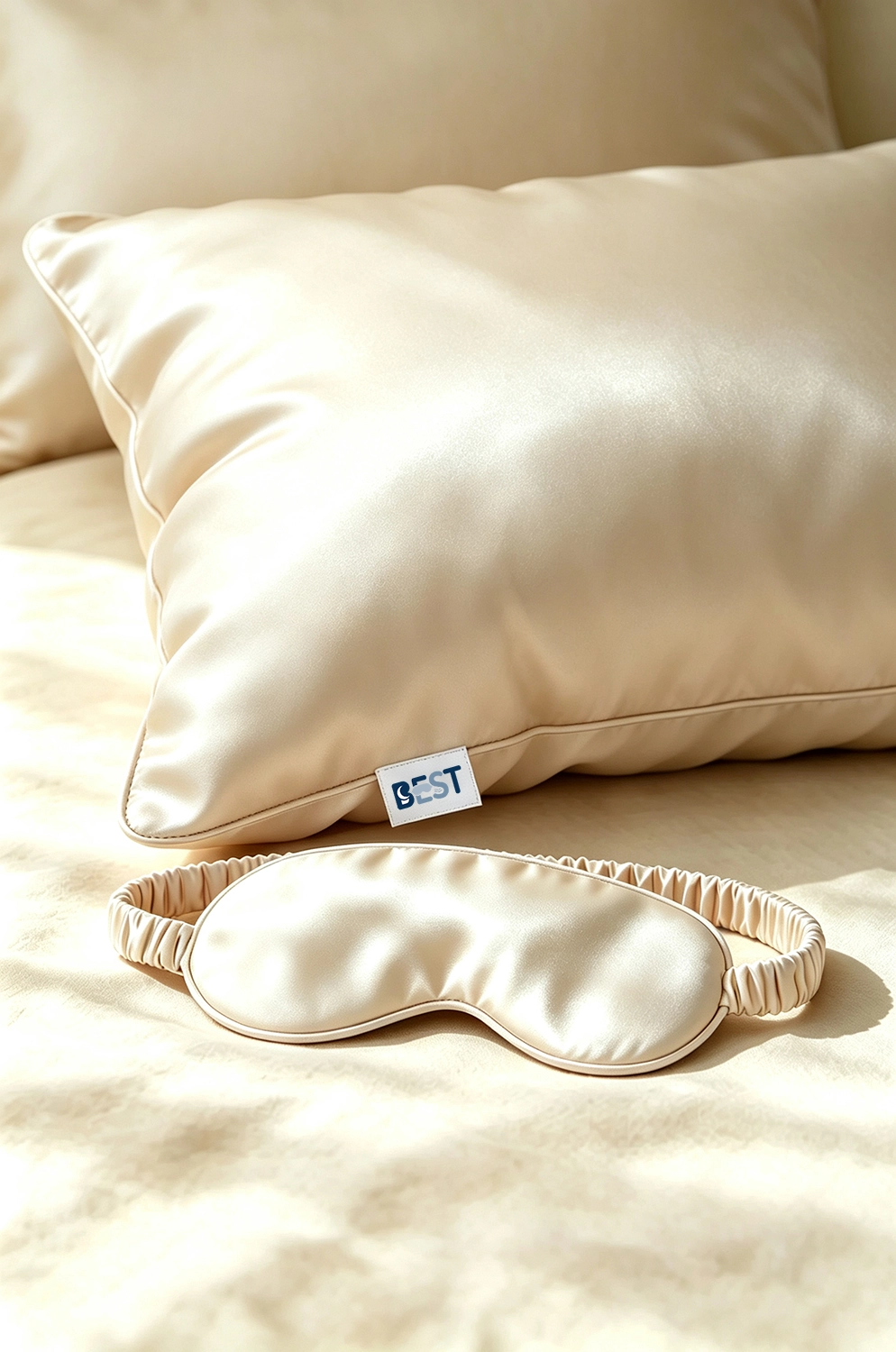
BEST™ 900 FP Goose Down Pillow
Engineered for adaptive cervical support and cloud-like loft to help relieve overnight neck strain.
Shop NowUpgrade Your Pillowcase Surface
While the pillow interior supports your neck, the pillowcase surface governs friction as you turn overnight.
A pure 100% Mulberry silk pillowcase provides an ultra-smooth, low-friction surface. This smooth glide allows effortless head movement without tugging on sensitive neck muscles or pulling delicate hair.

Learn more about silk textile properties at the Smithsonian Institution Silk Archive.
Replace Aging Sleep Products Timely
If your pillow is lumpy, permanently flattened, or fails to spring back when fluffed, its internal structure has degraded. Sleeping on worn-out pillows is a leading contributor to recurring morning soreness.
Nighttime Habits for Morning Relief
- Avoid prolonged screen time in bed: Staring down at phones right before sleep strains cervical muscles.
- Adopt a gentle winding-down routine: Light neck rolls before sleep help relax daytime tension.
- Rise smoothly in the morning: Avoid sudden, jerky movements when turning off your alarm.
Review posture habits at Harvard Health: Everyday Habits and Neck Discomfort.
Frequently Asked Questions About Neck Stiffness
An ergonomic pillow designed for your posture can significantly reduce overnight strain if improper bedding was the culprit. However, if your neck stiffness is caused by medical conditions or poor daytime posture, bedding adjustments should be combined with professional advice.
Not necessarily. Side sleepers need enough height to fill their shoulder gap, but “firm” is not mandatory. A high fill-power goose down pillow can provide ample loft while remaining plush and pressure-relieving.
A silk pillowcase does not offer structural alignment support like a pillow core, so it cannot treat joint pain. However, its silky texture reduces surface friction as you turn, helping reduce subtle micro-tensions while sleeping.
Back sleeping and side sleeping are generally superior to stomach sleeping. Both allow your cervical spine to maintain a neutral alignment when supported by an appropriate pillow.
If your soreness is severe, relentless, worsening, or accompanied by weakness, numbness, or shooting arm pain, consult a physician promptly.
Reference Mayo Clinic’s Neck Pain Symptom Checker for additional medical guidance.
Final Thoughts
Waking up with persistent neck stiffness shouldn’t just be accepted as part of your daily routine.
After evaluating countess sleep configurations, my core recommendation is clear: temporary daytime fixes like stretches offer quick relief, but evaluating your 7-to-8-hour nightly sleep setup addresses the root cause.
Audit your pillow height, ensure proper spine alignment, check your mattress condition, and consider gentle luxury upgrades like silk pillowcases to eliminate unnecessary friction.
By making thoughtful, informed adjustments to your sleep environment, you give your cervical spine the support it needs to wake up rested, relaxed, and pain-free night after night.

Upgrade Your Sleep System Today
Experience optimal cervical alignment and premium comfort with our 900 Fill Power Goose Down Pillow.
Explore BEST™ Pillow
《Wake Up with Neck Stiffness》有2条评论
评论已关闭。