How to Get Better Night Sleep: A Practical Guide to 8 Hours of Quality Rest
A realistic roadmap to restorative night sleep, circadian alignment, and building an optimal sleep environment.
1. How Much Night Sleep Do You Really Need?
For most adults, consistently securing 7 to 9 hours of quality night sleep is a far more practical and realistic target than forcing yourself to hit exactly 8 hours every night.
The American Academy of Sleep Medicine (AASM) recommends that adults regularly sleep 7 or more hours per night to promote optimal health. However, individual sleep requirements naturally vary based on genetics, lifestyle, and health condition.
2. Why You Can’t Sleep 8 Hours Even When You Have Enough Time
A common question is: “I get into bed at 11:00 PM and get up at 7:00 AM. Why do I still feel tired?”
The reason is simple: You don’t give yourself enough actual sleep time relative to your sleep efficiency.
A Typical Fragmented Night:
- 11:00 PM: Get into bed
- 11:40 PM: Finally fall asleep (40 minutes lost)
- 2:30 AM: Wake up briefly
- 4:00 AM: Wake up again
- 6:30 AM: Wake up prematurely
- 7:00 AM: Get out of bed
Benefits of Actual Sleep: Quality night sleep consolidates memory, stabilizes emotional resilience, maintains sharp mental focus, boosts immunity, regulates hormones, and supports overnight cellular repair.
Core Takeaway: Lying in bed for 8 hours ≠ 8 hours of restorative sleep. Frequent night awakenings lead to sleep fragmentation, reducing overall rest quality.
3. What Time Should You Go to Bed?
Because falling asleep instantly isn’t completely under your voluntary control, use these recommended bedtime windows based on your required morning wake-up time for optimal night sleep:
| Wake-up Time | Target Bedtime Window |
|---|---|
| 6:00 AM | 9:00 PM – 11:00 PM |
| 7:00 AM | 10:00 PM – 12:00 AM |
| 8:00 AM | 11:00 PM – 1:00 AM |
The National Heart, Lung, and Blood Institute (NHLBI) emphasizes maintaining a consistent sleep schedule, keeping weekend bedtimes close to weekday routines.
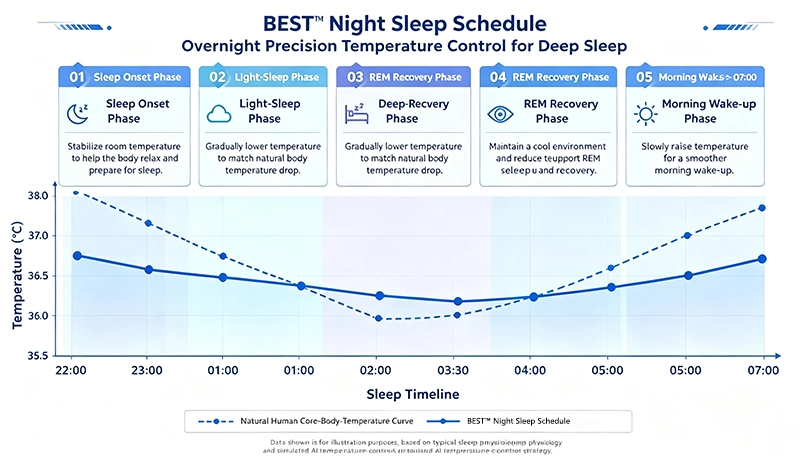
4. Start With Your Wake-Up Time
Trying to force yourself to “sleep immediately” often induces anxiety and pressure. Setting a fixed wake-up time is substantially easier to maintain and execute.
- Fixed Wake-Up > Fixed Bedtime: Prioritize a consistent waking time every day and avoid excessive weekend oversleeping.
- Gradual Shifts: Shift your schedule forward by 15–30 minutes at a time rather than making drastic jumps.
- Morning Sunlight: Expose yourself to natural outdoor light immediately after waking to reset your circadian rhythm and regulate melatonin release (NHLBI Sleep Research).
- Napping Strategy: Keep naps under 20–30 minutes, and avoid napping after 3:00 PM so it won’t ruin your night sleep.
5. Build a 60–90 Minute Wind-Down Routine
- Digital Detox: Reduce smartphone exposure and blue light before bed. Avoid intense exercise, high-stress work, or heated discussions late at night.
- Relaxation Practices: Read physical books, perform deep breathing, write down a worry journal, or take a warm bath to prepare for restful night sleep.
- Dietary Hygiene: Shift caffeine intake (coffee, tea, energy drinks) to earlier in the day. Limit evening fluids and avoid late snacks to minimize middle-of-the-night bathroom trips. Avoid alcohol near bedtime as it severely degrades REM and deep sleep.
6. The 4 Things I Check in My Bedroom
- Temperature: Keep room temperature between 18–22°C (64–72°F). Cooler environments facilitate deeper night sleep.
- Environment: Maintain maximum darkness and insulate against noise.
- Pillow Selection: The wrong pillow leads to neck pain and mid-night awakenings.
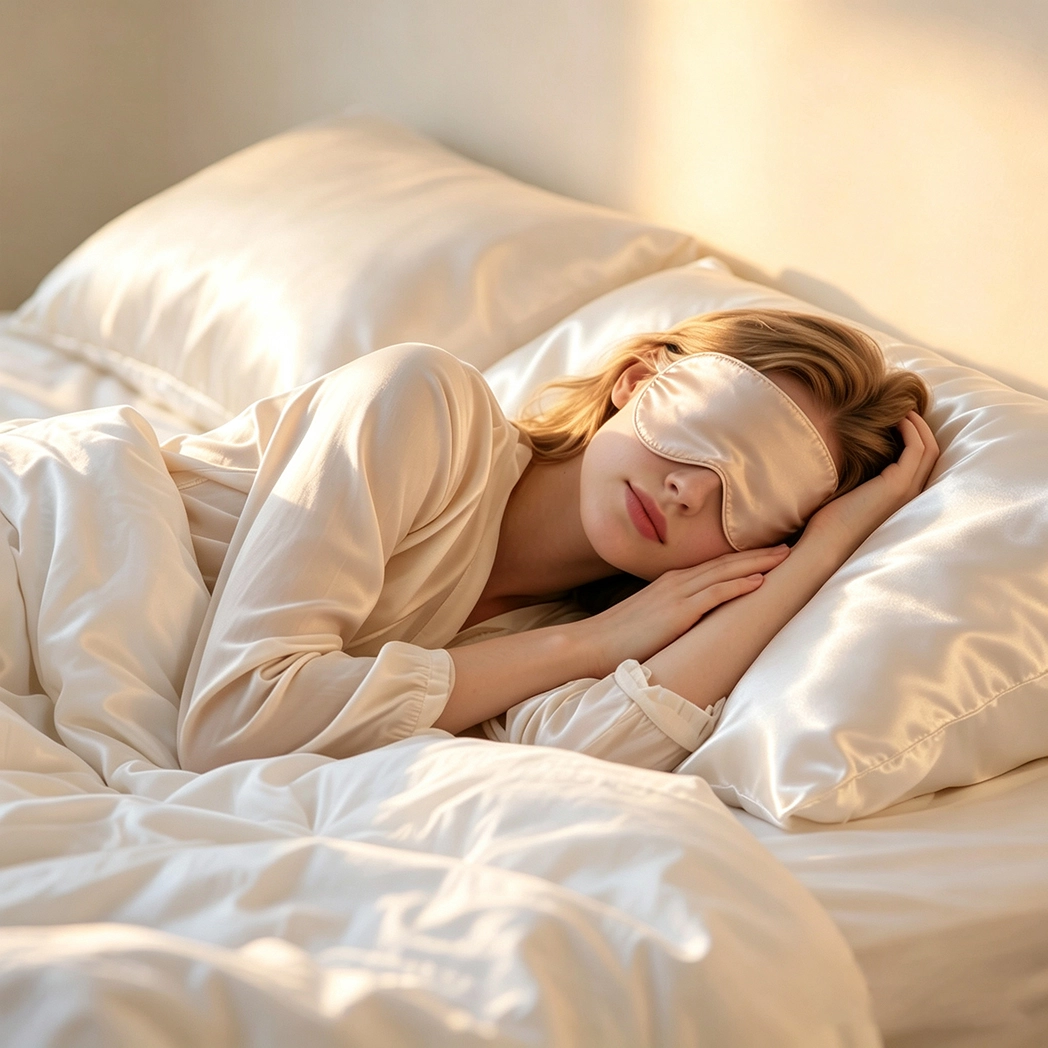
Elevate Your Rest: Silk Pillowcase & Silk Eye Mask
While proper support from your pillow is essential, what touches your skin directly impacts your night sleep quality just as much. Pairing your pillow with a premium 100% Mulberry Silk Pillowcase reduces facial friction, locks in moisture, and helps keep your skin and hair smooth overnight. Add a light-blocking Silk Sleep Mask to instantly create complete darkness—helping you fall asleep faster and protect your deep sleep cycles uninterrupted.
Explore Silk Pillowcases & Sleep Masks →7. Daytime Habits Determine Your Night Sleep
- Exercise: Maintain regular physical activity, but avoid high-intensity workouts within 3 hours of bedtime.
- Stress Management: Incorporate relaxation techniques during high-stress periods.
- Stimulus Control: Reserve your bed exclusively for sleep and intimacy—do not work, watch videos, or scroll social media in bed.
8. Troubleshooting: Why Do I Keep Waking Up at Night?
If you regularly wake up during the night, evaluate these common factors affecting your night sleep:
| • Room is too hot | • Excess late caffeine |
| • Ambient noise disruption | • Nighttime alcohol consumption |
| • Light pollution | • Elevated stress levels |
| • Uncomfortable or unsupportive pillow | • Need to use the bathroom |
An unsupportive pillow makes it difficult to remain comfortable when shifting positions, leading to physical restlessness.
9. Try a 7-Day Sleep Experiment
Follow this structured 7-day schedule to systematically upgrade your night sleep routine:
| Day | Core Focus | Bedtime | Est. Sleep Time | Wake Time | Night Awakenings | Morning Energy |
|---|---|---|---|---|---|---|
| Day 1–2 | Lock in fixed wake-up time | 11:00 PM | 7.0 hours | 7:00 AM | 2 | Moderate |
| Day 3 | Cut caffeine after 2:00 PM | 10:45 PM | 7.2 hours | 7:00 AM | 1 | Moderate-High |
| Day 4 | No screens 60 min before bed | 10:30 PM | 7.5 hours | 7:00 AM | 1 | High |
| Day 5 | Set bedroom temp to 19°C | 10:30 PM | 7.8 hours | 7:00 AM | 0 | Very High |
| Day 6 | Upgrade pillow height & silk pillowcase | 10:30 PM | 8.0 hours | 7:00 AM | 0 | Optimal |
| Day 7 | Review & consolidate schedule | 10:30 PM | 8.0 hours | 7:00 AM | 0 | Optimal |
10. The Sleep Environment I Personally Prefer
After testing different pillows and pillowcase materials, I found that I pay much more attention to the combination than I used to. The pillow needs to provide the right level of support, while the pillowcase should feel comfortable against the skin and hair for uninterrupted night sleep.
That’s one of the reasons I designed the BEST™ Sleep System around a goose down pillow, Mulberry silk pillowcase, and silk eye mask.
11. What I Changed in My Own Sleep Routine
I used to think that getting more time in bed automatically meant better night sleep. After paying more attention to my sleep routine, I realized that the small things mattered more than I expected: when I stopped working, how much coffee I had in the afternoon, how warm the bedroom was, and whether my pillow actually felt comfortable after several hours.
《How to Get Better Night Sleep: A Practical Guide to 8 Hours of Quality Rest》有1条评论
评论已关闭。